
Manor Farm House is off-grid by design. When we arrived in 2005 the inherited system wasn't up to the job, so we built something that is: a 6kW wind turbine for the windy months, 4kWp of solar for the bright ones, and a diesel generator as backup. Twenty years on, it works beautifully.
In 2006, after extensive research, we installed a 6kW Proven Wind turbine, a large battery bank, and SMA control equipment.
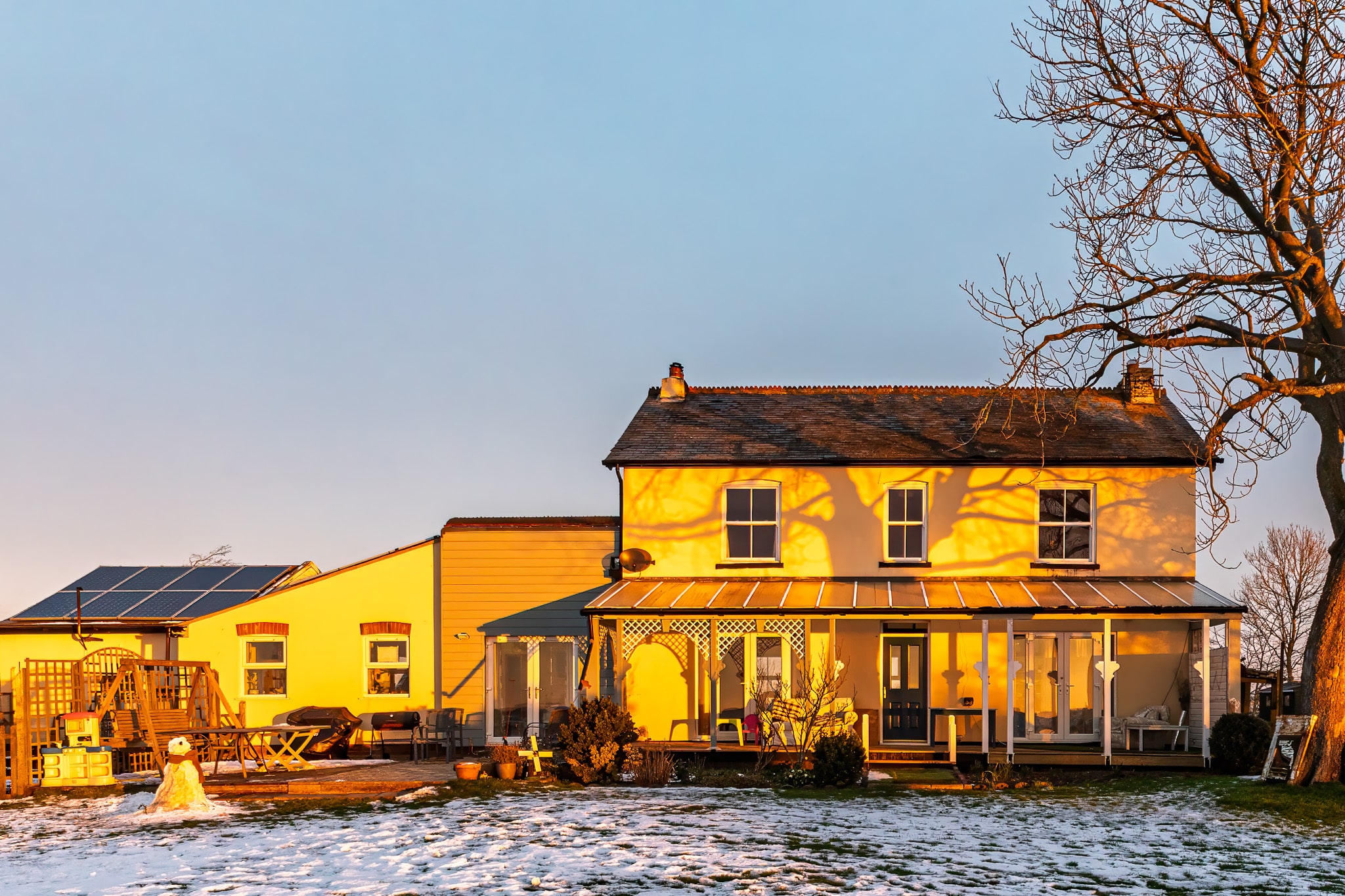
So why a wind turbine rather than solar? At the time, solar panels were prohibitively expensive — though the feed-in tariff was 45p per kWh. We decided the best kW for our buck was a large-for-domestic wind turbine. The economics would be different today, with solar prices having tumbled, but the turbine has more than earned its keep. As early adopters of domestic wind power we learned a great deal about how these machines work — knowledge that has paid off many times over in keeping the system running smoothly.
The total installation cost less than £30,000 — compared with the £115,000 the electricity board quoted to connect us to the public mains in 2006, a 2km buried cable from the A47. (Overhead cables aren't an option as we are in the Broads National Park.) That quote was twenty years ago. We've made informal enquiries since, and were told that any updated quotation would require a substantial non-refundable deposit before they'd even put a number on it — a fair indication of how reluctant the network operator is to take the work on. With UK grid connection costs having risen well ahead of inflation, and the Broads National Park requirement for buried cable still in force, mains connection today would be prohibitively expensive. It is not, in any practical sense, an option — which makes the off-grid system not an alternative to mains power, but the answer.
For the financial side of all this — capital costs, running costs, FiT income, and the twenty-year economic picture — see Power System Costs.
Proven turbines are uncommon in mainland Britain — though we counted at least thirty during ten days in Shetland in 2023, where they're a familiar feature of the landscape.
 The Wind Turbine
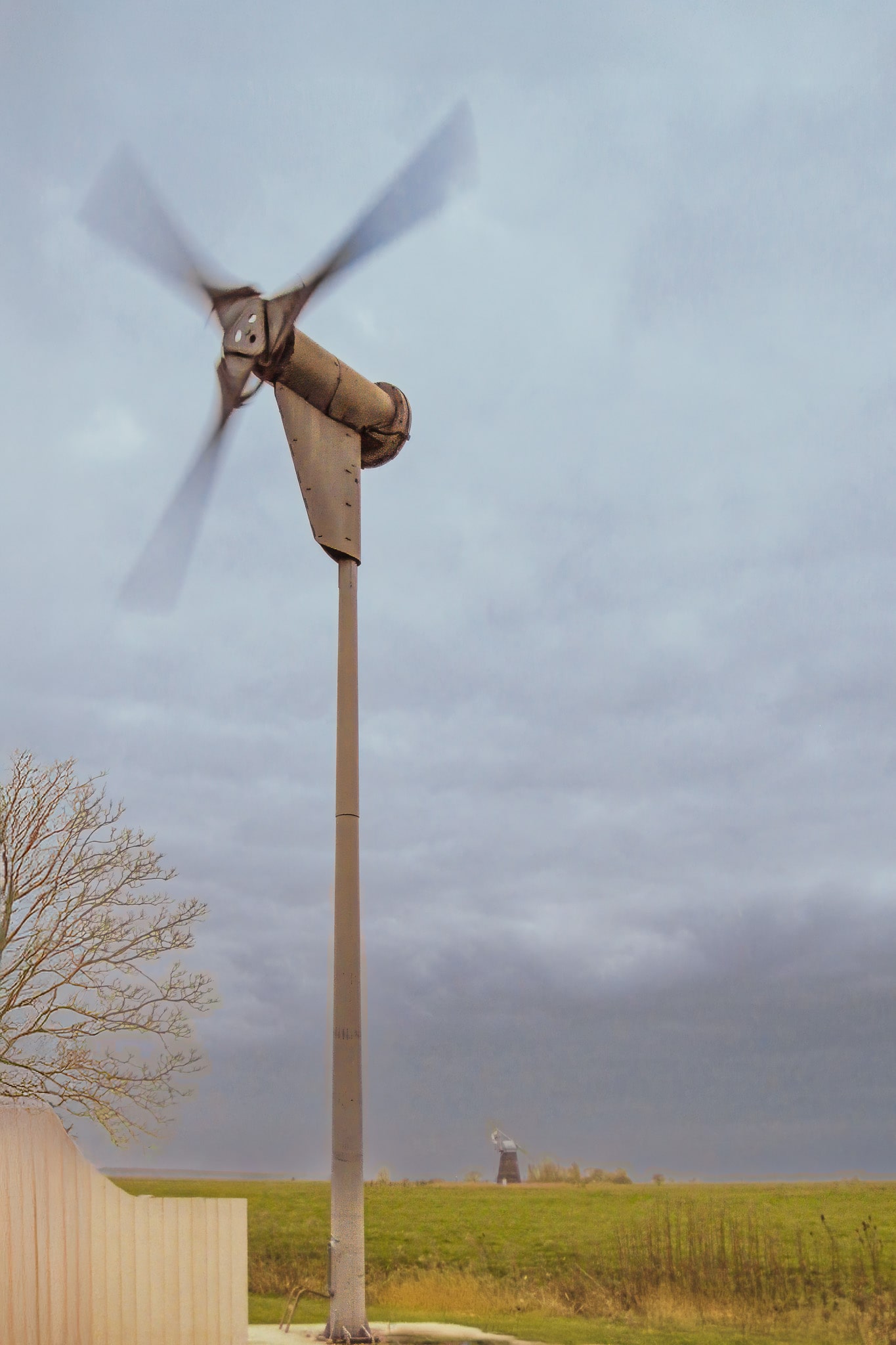
The wind turbine, control equipment and battery were sourced, installed and commissioned in May 2007 by Bob Coombes and Hugh Keeler of Green Generation. The installation benefited from a government grant towards the cost — part of the early support for domestic renewables at the time.
Andy Hey of Hey Property did a great job of obtaining the appropriate permissions — no small task in the Broads conservation area.
The turbine was made by Proven in Ayrshire, Scotland. Proven turbines were first developed in the 1980s by Gordon Proven to be robust, reliable and able to withstand extreme weather conditions. In October 2011 the firm went into administration and was acquired by Kingspan. SD Wind Energy is the current manufacturer of this design of turbine, providing continuity of parts and support.
Proven WT6000 – 6kW (50Hz)
- Turbine type: Proven 6 kW
- Nominal output: 6 kW
- Rotor diameter: 5.57 metres
- Mast height: 9 metres
Full specification of the Wind turbine.
The 9 metre mast is the maximum height permitted by the Broads Authority planning consent, given the conservation status of the area. The nacelle and blades were originally finished in grey rather than the factory's black, at the planners' request to blend with the marsh landscape. The finish has weathered over the years, as one would expect of any installation in this exposed setting. With a 2-mile clear westerly fetch across the marsh and prevailing westerlies, the turbine performs strongly where it stands.
The original wood and epoxy blades were replaced with Kevlar blades in 2008 at a cost of £1,000. Those blades remain in excellent condition with no signs of deterioration as of December 2024 — sixteen years and counting.
Here is a slideshow of the foundations being made and the installation of the Wind Turbine and anchor point.
The device is mechanically simple: blades, shaft, three-phase wild AC generator, overspeed springs, no gearing. The overspeed protection is particularly elegant. As strong winds press on the blades they spin faster and generate higher voltages; under load, the springs deform and feather the blades, slowing them down. The turbine must be under load for this protection to engage — which, in our installation, it always is.
The prevailing wind across the marsh is from the West and our wind turbine is situated to the West of the house with nothing to obstruct the wind from that direction for at least 2 miles.
Maintenance of the wind turbine is carried out every other year by Geoff Pacey: the turbine is lowered for inspection, cleaned, the spring supports checked and replaced if needed, and the bearings re-greased. A simple, well-understood maintenance regime that has kept the system reliable for nearly two decades.
As of April 2026 the wind turbine has generated 52MWh since installation. With continued biennial maintenance, it should have at least another decade of useful life ahead of it.
 Windy Boy
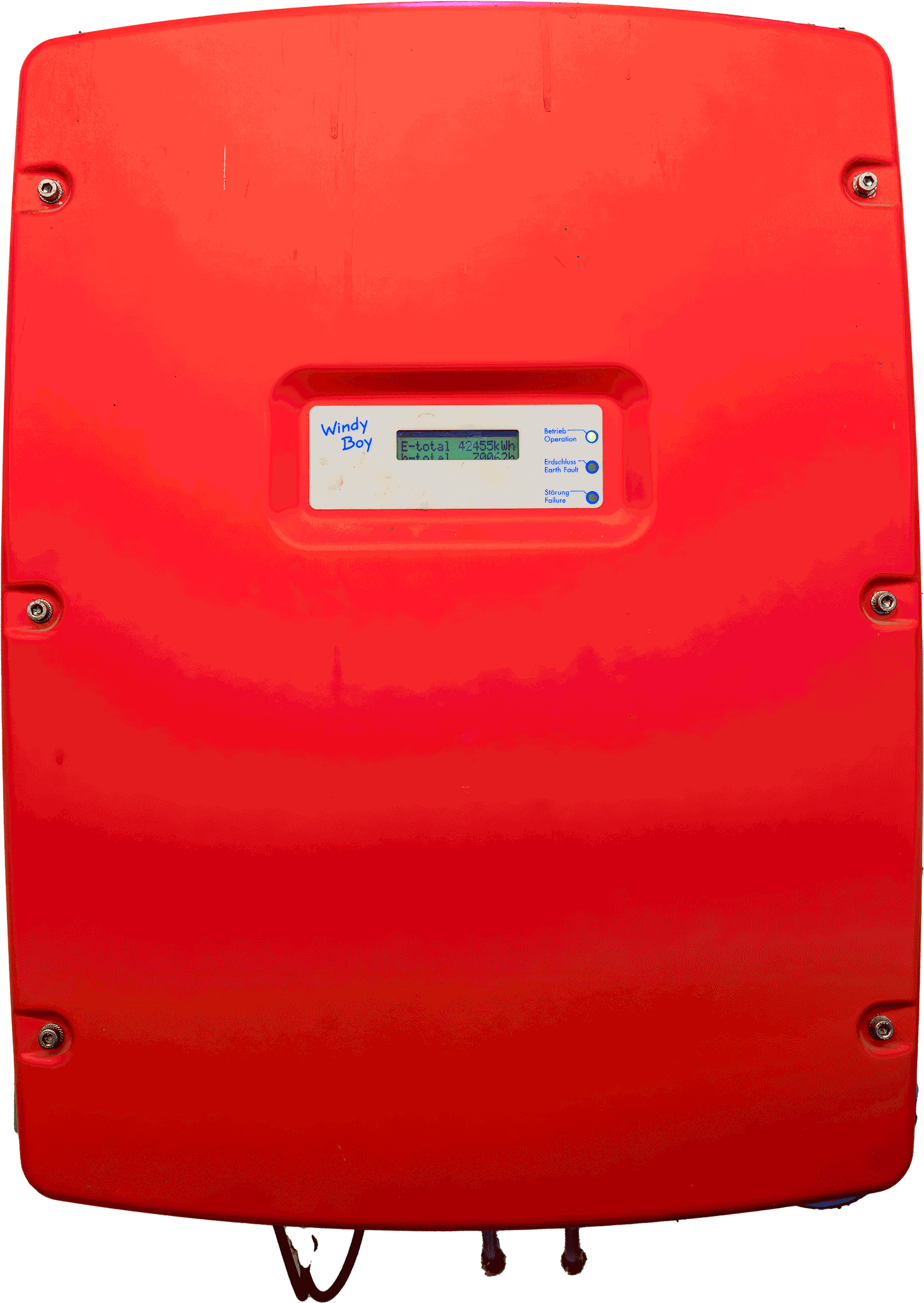
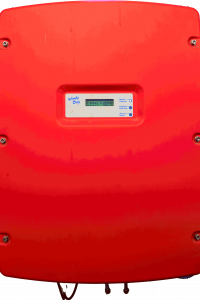
Alongside the turbine we originally installed a Proven rectifier and overvoltage controller, paired with an SMA Windy Boy WR6KA-15 inverter. (Yes, the name is silly — but that's what SMA call them.) The device is registered with SMA's online Service Centre.
The wind turbine produces "wild AC" — three-phase alternating current at whatever frequency the blades happen to be spinning. To make that useful, the rectifier converts it to DC, which the Windy Boy then inverts into clean 240V 50Hz mains-equivalent power.
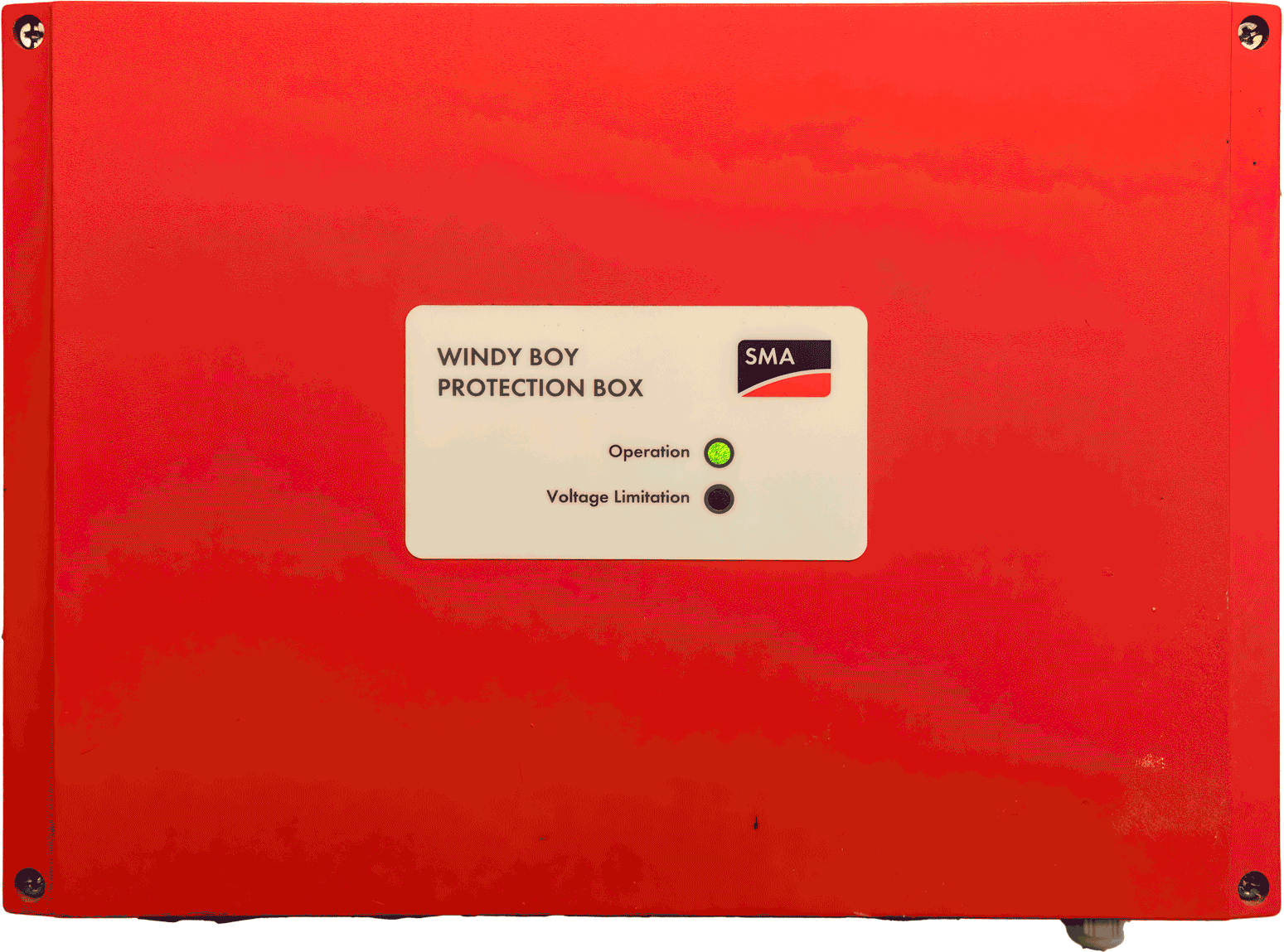
The protection arrangement evolved during the early years of operation. We replaced the original Proven rectifier and controller with an SMA Windy Boy Protection Box and a 6kW dump resistor — a more robust solution that has worked flawlessly since. The protection box rectifies the AC to DC and, critically, switches the output to the dump resistor whenever the DC voltage exceeds 600V (the Windy Boy's input limit). The dump resistor keeps the turbine under load in heavy winds, which is essential for the overspeed springs on the turbine itself to function as designed.
At the begining we were genuine early adopters of domestic wind, and SMA flew two engineers from Germany to help us fine-tune the inverter parameters. Once the right configuration was established, the system has run reliably ever since.
Solar Panels & Sunny Boy Inverter
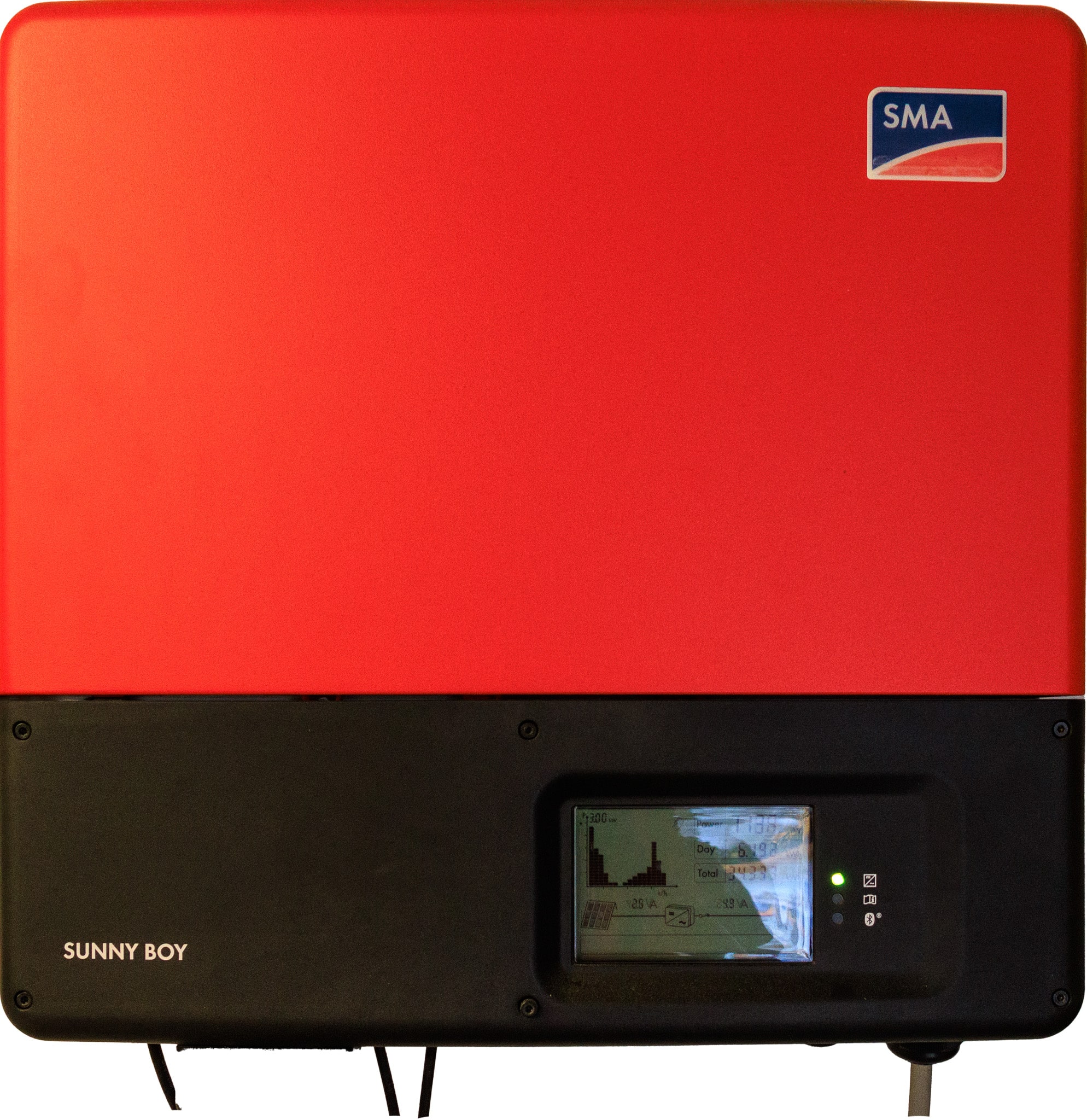
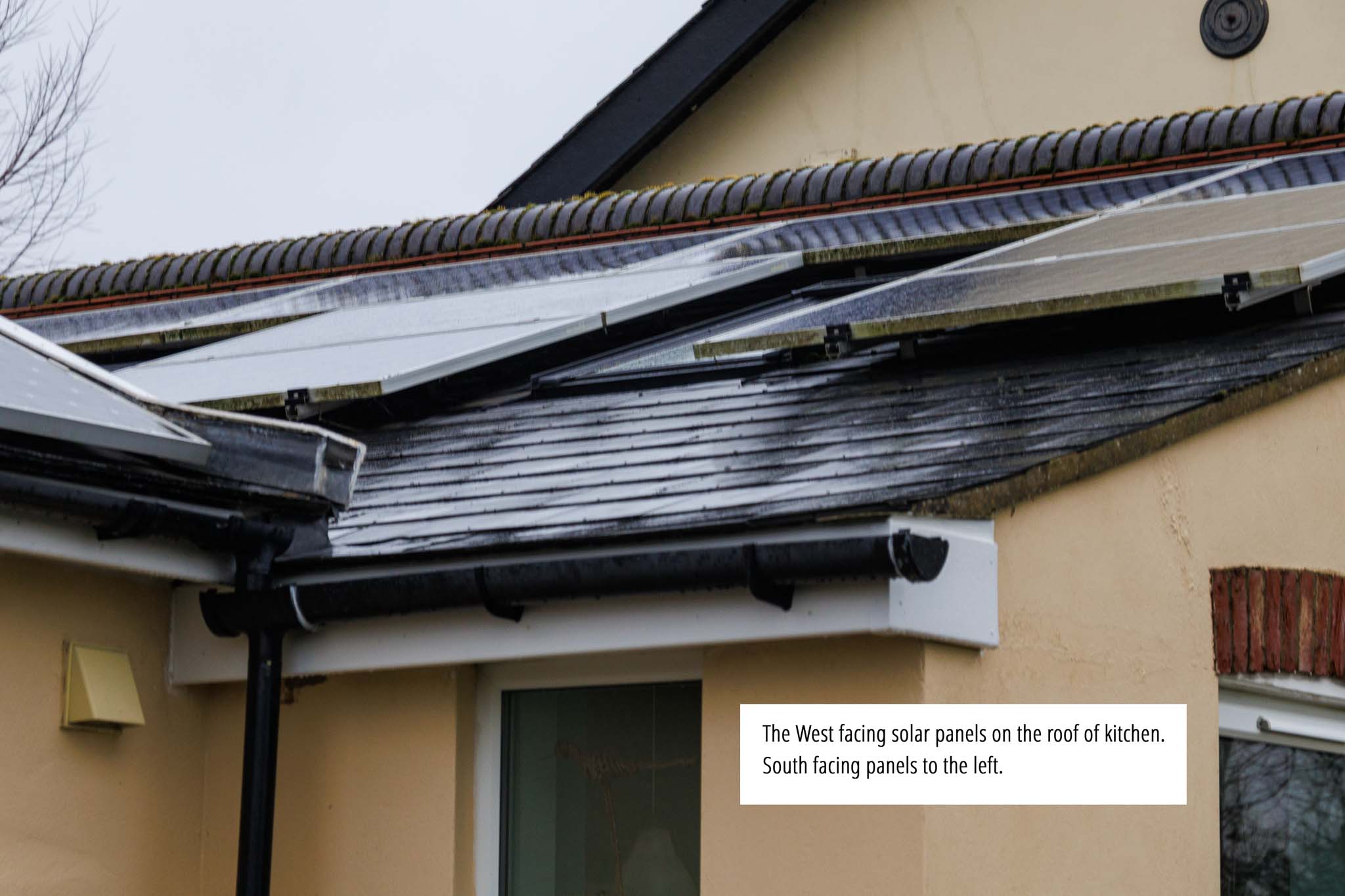
By the 2010s solar panel prices had fallen dramatically, and we noticed that windless days were often sunny ones. Adding solar to the wind turbine made obvious sense: the two sources complement each other, between them covering most weather conditions and substantially reducing how often the generator needs to run.
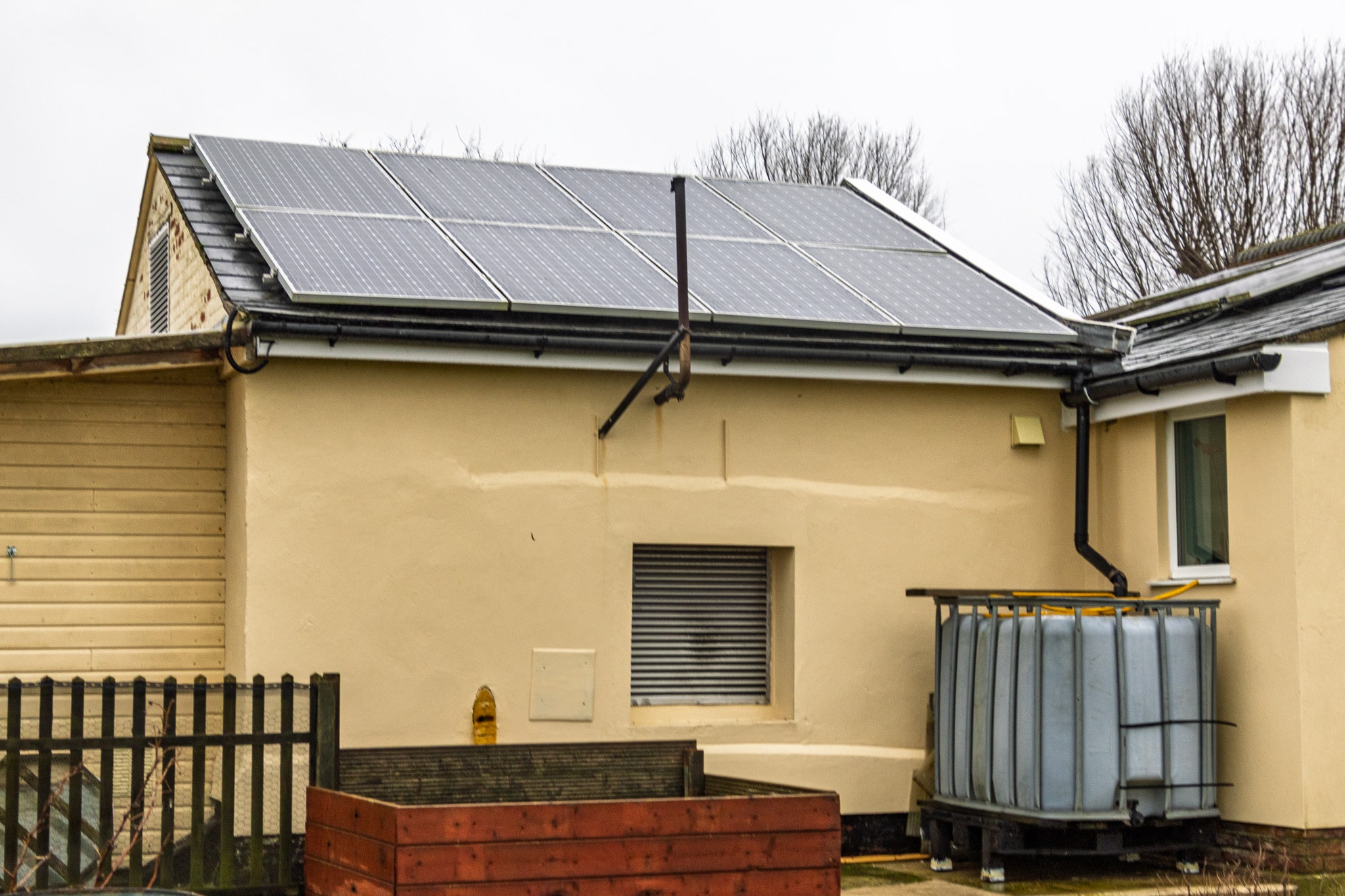
In early 2012 we self-installed an experimental 1.25 kWp array on the engine shed roof with a small inverter, at a cost of around £2,400. It worked beautifully. Later that year, the array was extended by a professional installer, bringing the total to 4 kWp split across two roofs, at a further cost of around £4,800 — a striking contrast with the substantial cost of the wind turbine installation five years earlier, reflecting how rapidly solar prices had fallen by then.
- 2 kWp on the engine shed roof, facing almost due south
- 2 kWp on the extension roof, facing almost due west
The full system was commissioned in October 2012. The current inverter is registered with SMA's online Service Centre.
The east-west and south split is deliberate: it spreads generation across the day rather than concentrating it around solar noon. The west-facing array still produces useful power well into the evening, which suits the household's typical usage pattern.
Between commissioning and December 2024, the solar arrays generated approximately 80 MWh — averaging around 6.3 MWh per year, almost double the output of the wind turbine.
Sunny Island
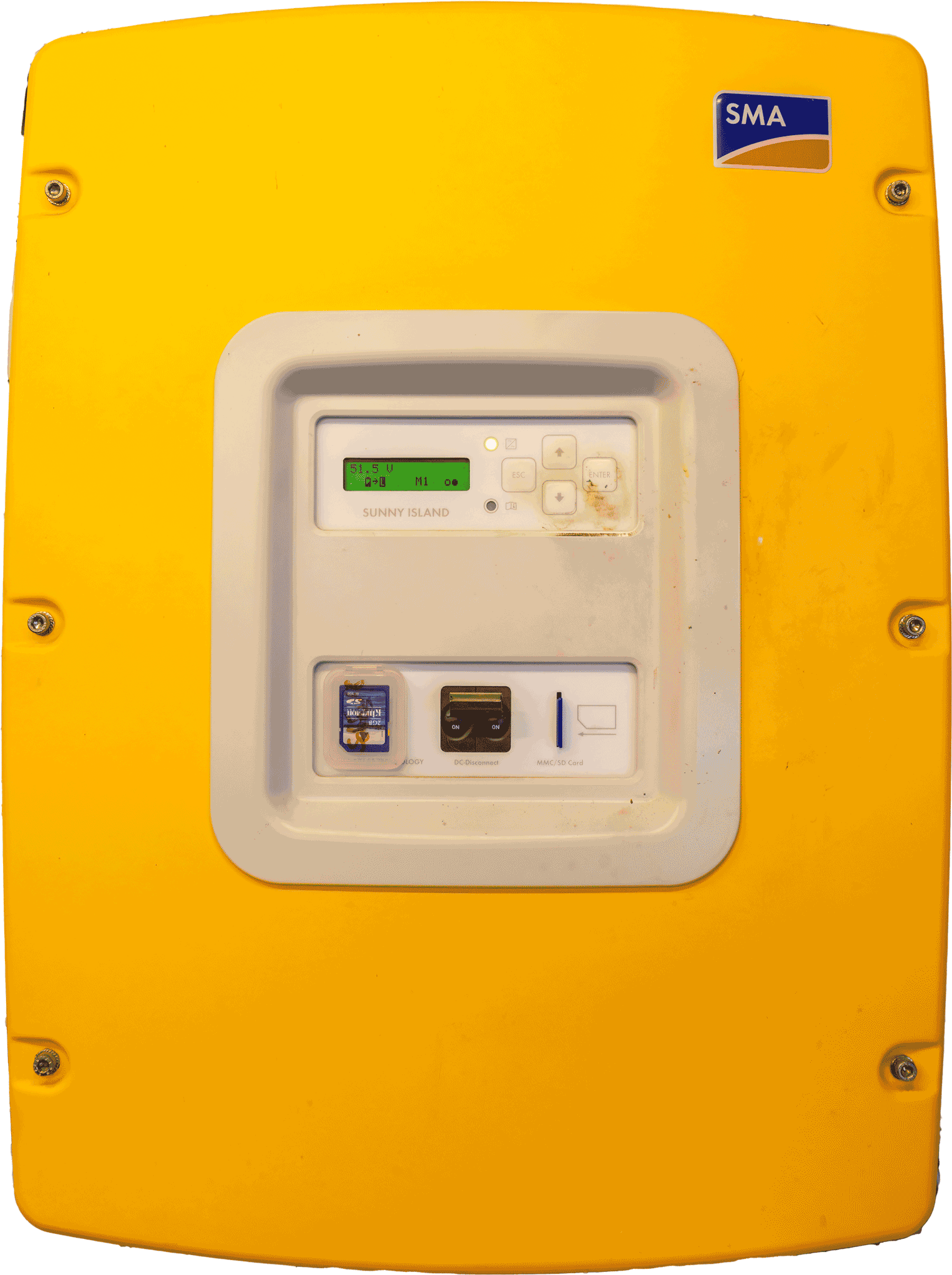 In normal operation, the turbine and solar feed the house directly, with any surplus charging the batteries. When generation falls below household demand — typically overnight, or on still, dull days — the batteries make up the difference. If battery state-of-charge drops below 40%, the Sunny Island automatically starts the diesel generator and runs it until the batteries reach 90%, which typically takes around seven hours. None of this requires any input from us.
Living off-grid does shape how you use electricity, though, and worth being honest about. With mains power, you simply switch things on without thinking. Here, the rhythm is gentler: when the turbine is spinning hard or the sun is full on the panels, that's the time to put the dishwasher on, run the washing machine, or top up the hot water tank. Doing so means we use generation directly rather than routing it through the batteries — and on really good days, surplus that would otherwise be dumped becomes effectively free hot water or laundry. None of this is automatic; it's a small daily judgement we make by glancing at the inverter displays. We've found the rhythm becomes second nature quickly.
We previously experimented with automated load controllers to switch high-demand appliances on automatically when surplus was available; in practice, the manual approach has proven simpler and just as effective.
The Battery
The battery bank is a set of 24 TAB 10PzS 1150L traction cells wired to give a nominal 48V at 1,275 Ah (C10). It was supplied and installed in November 2017 by ManBat / EcoBat (now Veloris), with a central watering system to simplify electrolyte topping-up. The total cost was just over £6,000.
We chose lead-acid traction cells deliberately. Lithium-ion would have offered higher energy density, but our Sunny Island controller is configured for lead-acid, and traction cells — the technology used in industrial forklifts and floor scrubbers — are designed for exactly the deep daily charge-discharge cycle that off-grid living demands. They tolerate the regime well and are well understood, with parts and expertise readily available across the country.
Eight years in (as of April 2026), the cells continue to perform well. Routine maintenance — topping up the electrolyte through the central watering system, checking specific gravity — is straightforward and well within DIY capability. Capacity has held up well: as of late April 2026, the diesel generator had not run since 9 March — over seven weeks of continuous operation (and counting) on renewables alone, through a full Norfolk early spring.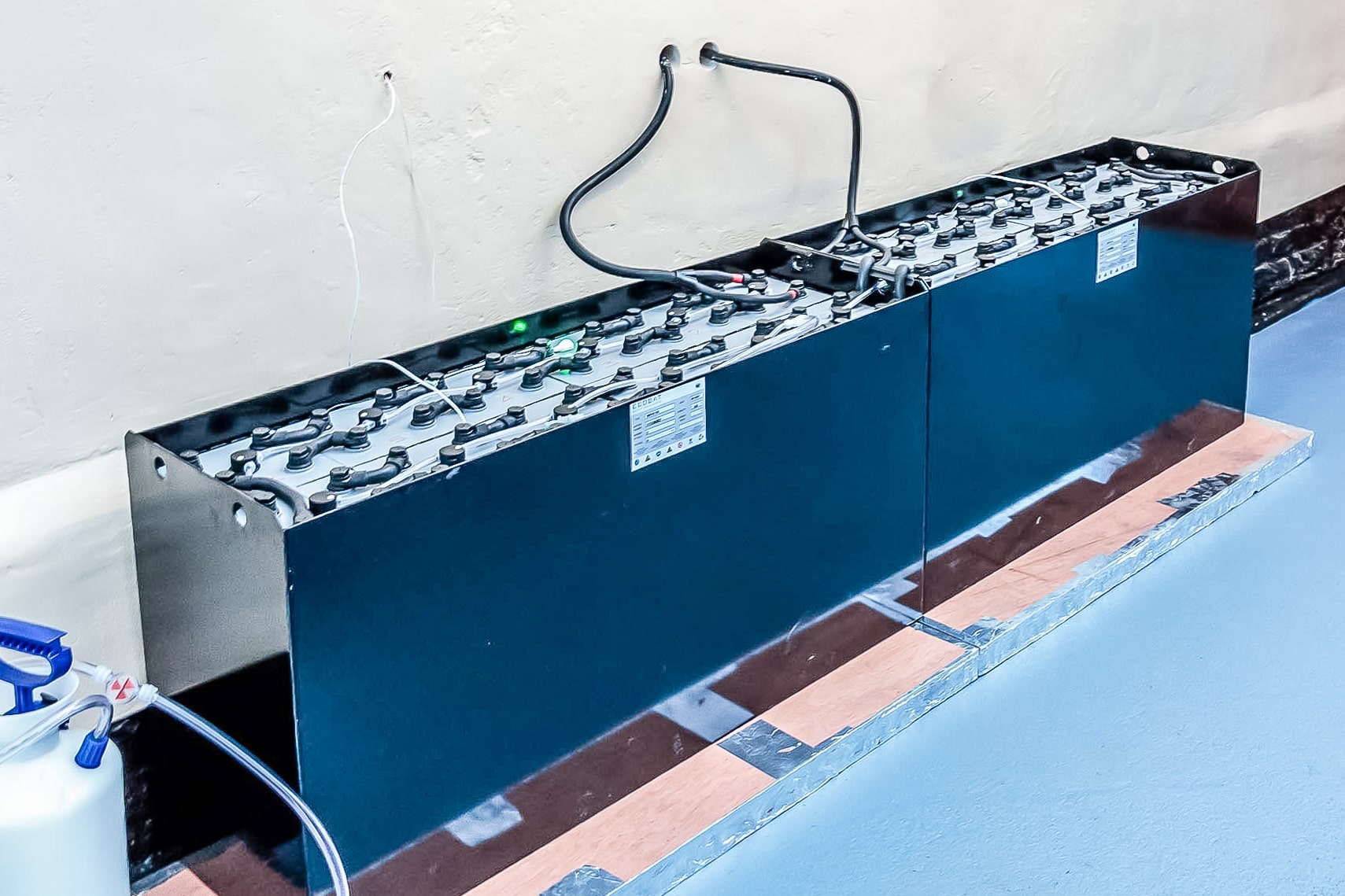
The previous battery
The system originally used a set of 24 Classic Solar Exide OPzS cells installed in 2007 alongside the SMA equipment. They served for around eleven years before performance degraded — one cell had to be removed and overheating issues prompted replacement. With hindsight, traction cells would have been a better choice from the outset; we made the change in 2017 and have not looked back.
Diesel Generator
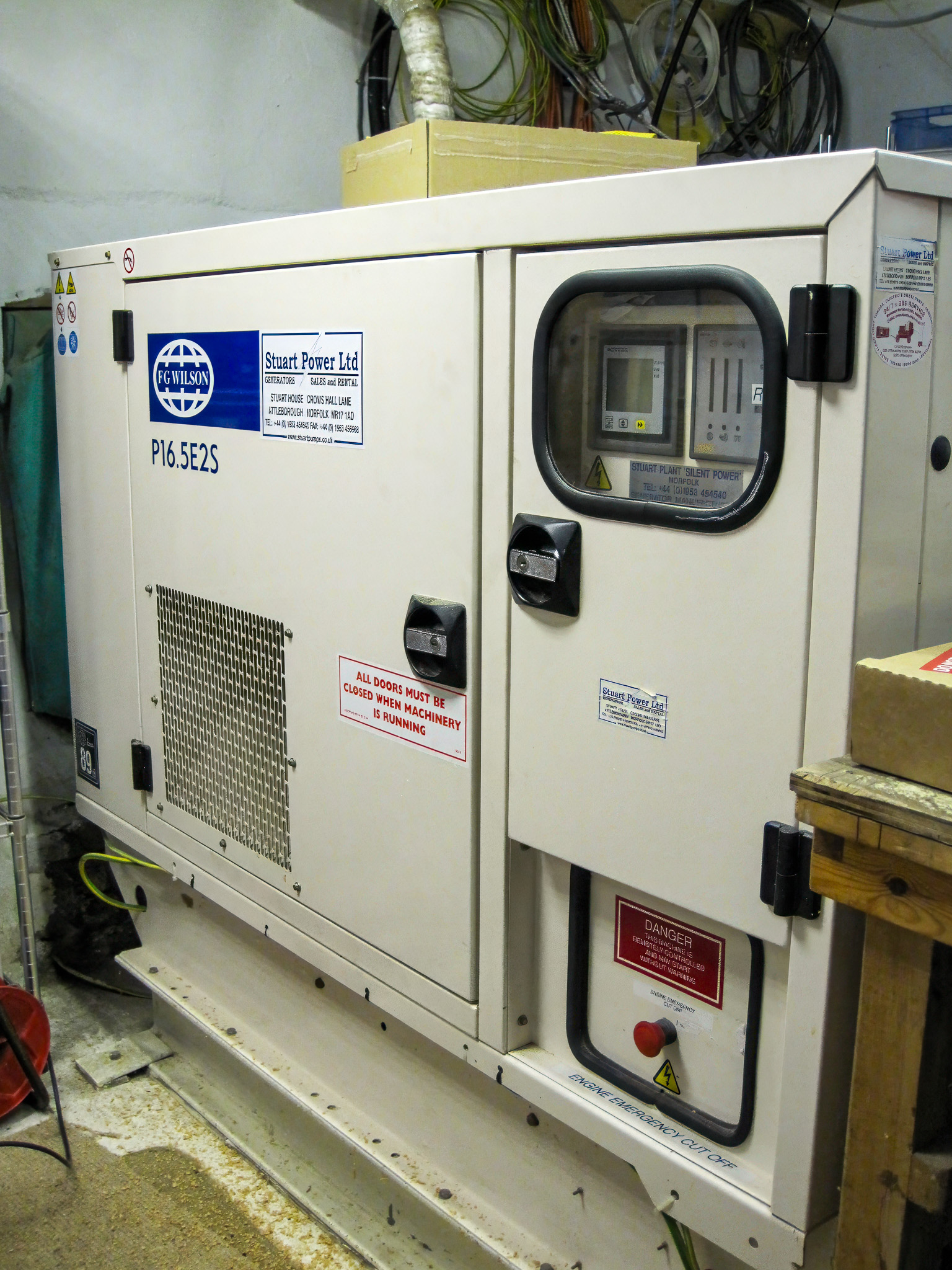
The generator is a 16.5 kVA Perkins-Leroy Somer set (Perkins HP51119U engine, manufactured 2003; Leroy Somer alternator; ACCESS 2000 control panel). It produces 16.5 kVA at 230V, 50Hz single phase. The set was already installed when we arrived in 2005 and has been a reliable third leg of the system ever since.
With the wind turbine and solar arrays carrying most of the load, the generator now runs for between 200 and 250 hours a year — less than 3% of the year. That figure has come down progressively as the renewable capacity has expanded: before solar was added, it was running 400–550 hours a year; before any renewables, considerably more. The generator is regular-serviced and well-loaded when it does run, which keeps it healthy.
The previous owner was badly advised and had the engine installed along with a small inverter and 12v backup battery. There is a remote starting device on the house which was used when any amount of electricity was needed. The meant that the diesel engine ran for long periods under very lightly loaded causing cokingThe build-up of unwanted carbon deposits, primarily in the fuel injector nozzles, caused by high temperatures and oil residue. This build-up can restrict fuel flow, reduce engine performance, and lead to various problems like excessive smoke, loss of power, and engine knocking.. To rectify that we had to run the engine with a large dummy load for a period to burn off the deposits.
When the generator does run, electricity is plentiful. The immersion heater is wired into the generator output, so a generator run also means a tank of hot water — useful in winter when sun and wind are scarce. At other times, hot water comes either from surplus renewable generation diverted through the immersion heater, or from the LPG boiler.
Total hours run since installation: just over 16,000 by the April 2026 — well within the design life of an industrial diesel of this class.